FTAI 📈 Analysis and forecast of the company's shares 📉
GURU.Markets stock price, segment price, and overall market index valuation
The company's share price
The stock performance of FTAI Aviation, a company specializing in aircraft engine and aircraft leasing, is closely tied to the health of the aviation industry. Its price reflects growing passenger traffic, demand for cargo, and airlines' need for flexible fleet management.

Share prices of companies in the market segment - Aviaprom
FTAI Aviation owns and manages a portfolio of aviation assets, primarily engines and aircraft. We classify it as the Aviaprom sector. The chart below shows the overall performance of this segment, which is closely linked to the health of the global aviation industry.

Broad Market Index - GURU.Markets
FTAI Aviation is a company that owns and operates aviation assets, such as engines and aircraft, leasing them to airlines. As a niche player, it is included in the GURU.Markets index. The chart below shows the overall market performance. Compare its stock price to trends in the aviation industry.

Change in the price of a company, segment, and market as a whole per day
FTAI - Daily change in the company's share price
For FTAI Aviation, which owns and leases aircraft engines and airplanes, daily price changes are a measure of its response to the state of the aviation industry. The graph of these fluctuations is unspectacular, but it is an important component of the formulas on System.GURU.Markets.

Daily change in the price of a set of shares in a market segment - Aviaprom
The aircraft leasing sector, where FTAI Aviation Ltd. operates, is sensitive to the state of the air travel industry. This chart shows the average daily volatility of the industry. Comparing this with FTAI's performance helps us understand whether its focus on engines and components makes it more or less cyclical than whole aircraft leasing companies.

Daily change in the price of a broad market stock, index - GURU.Markets
FTAI Aviation is a company engaged in the leasing and maintenance of aircraft engines and aircraft. Its business is directly dependent on the health of the aviation industry. The chart below illustrates the high volatility typical of the aviation sector, which is key context for FTAI's valuation.

Dynamics of market capitalization of the company, segment and the market as a whole over 12 months
Annual dynamics of the company's market capitalization
FTAI Aviation is a company engaged in the leasing of aircraft engines and aircraft. Its business serves as a barometer of the health of the global aviation industry. The year-over-year stock price performance, shown in the chart, directly reflects the demand for air travel.

Annual dynamics of market capitalization of the market segment - Aviaprom
FTAI Aviation Ltd. owns and leases aircraft engines and aircraft. Its business model, based on asset management throughout their entire lifecycle, ensures high returns. The chart shows how its unique expertise in this niche allows it to outperform the aviation and leasing sectors.

Annual dynamics of market capitalization of broad market stocks, index - GURU.Markets
FTAI Aviation owns and leases aircraft engines and aircraft. Its business is cyclical and dependent on the health of the aviation industry. The company's ability to effectively manage its fleet of assets determines its success in this competitive sector.

Dynamics of market capitalization of the company, segment and the market as a whole for the month
Monthly dynamics of the company's market capitalization
FTAI Aviation owns and leases aircraft engines and aircraft. The monthly fluctuations on the chart reflect the state of the global aviation industry: growth in air travel increases demand for its assets and engine maintenance services.

Monthly dynamics of market capitalization of the market segment - Aviaprom
FTAI Aviation Ltd. owns and leases aviation assets, primarily commercial aircraft and engines. The performance of the aviation sector, shown in the chart, depends on the health of air travel. This allows us to assess how FTAI's unique lifecycle asset management strategy and focus on engines create value in this capital-intensive industry.

Monthly dynamics of market capitalization of broad market stocks, index - GURU.Markets
FTAI Aviation owns and leases aircraft engines and aircraft. This business is highly dependent on the health of the aviation industry, which is cyclical and sensitive to fuel prices and economic growth. The chart below shows the overall market sentiment, which directly impacts the outlook for air travel.

Dynamics of market capitalization of the company, segment and the market as a whole for the week
Weekly dynamics of the company's market capitalization
Shares of FTAI Aviation, which owns and leases aircraft engines and aircraft, respond to the aviation industry's dynamics on a weekly basis. News about passenger traffic growth, airline financial health, and fuel prices directly impact the valuation of its assets and cause significant price fluctuations.

Weekly dynamics of market capitalization of the market segment - Aviaprom
The aviation industry, where FTAI Aviation operates, reacts weekly to common factors: fuel prices, passenger traffic data, and the financial health of airlines. These news items set the tone for all players. The chart shows how FTAI shares compare to the overall industry trend.

Weekly dynamics of market capitalization of stocks of the broad market, index - GURU.Markets
FTAI Aviation owns and leases aircraft engines and aircraft. Its business is directly dependent on the health of the aviation industry, traffic volumes, and fuel prices. The chart below shows how closely the company's shares correlate with cycles in the aviation industry and the stock market as a whole.

Market capitalization of the company, segment and market as a whole
FTAI - Market capitalization of the company
FTAI Aviation's market capitalization dynamics are a numeric indicator of the health of global aviation logistics. The chart reflects the value of the company's unique asset portfolio, from aircraft engines to infrastructure terminals. Its growth demonstrates how investors assess the company's ability to generate revenue at key hubs of global trade and transportation.

FTAI - Share of the company's market capitalization within the market segment - Aviaprom
FTAI Aviation owns and manages a portfolio of aviation assets, including engines and aircraft. The company's market capitalization reflects its unique business model and position in the leasing market. The chart below shows how investors assess its position in the complex aviation industry.

Market capitalization of the market segment - Aviaprom
FTAI Aviation operates in the aviation industry, and the chart below shows the total value of this global sector. Its dynamics represent the pulse of global air travel, reflecting everything from fuel prices to passenger traffic. It is against this backdrop that FTAI's aviation asset investment strategy is being tested.

Market capitalization of all companies included in a broad market index - GURU.Markets
The chart below shows the full spectrum of the global economy, including key sectors like aviation. FTAI Aviation owns and leases aircraft engines and aircraft. Its market capitalization is directly dependent on the health of global air travel, serving as a barometer of this critical industry.

Book value capitalization of the company, segment and market as a whole
FTAI - Book value capitalization of the company
FTAI Aviation's book value is its fleet of actual aircraft and engines. The dynamics of this chart directly reflect the company's physical portfolio of aircraft assets, which it leases globally. Growth in this figure reflects the purchase of new aircraft and components, the material foundation of its aviation business.

FTAI - Share of the company's book capitalization within the market segment - Aviaprom
FTAI Aviation's share of the sector's assets is a direct indicator of its control over the real aircraft hardware fleet. The company owns and manages a vast number of aircraft engines and entire airliners, establishing a strong physical foundation in the aircraft leasing and maintenance niche.

Market segment balance sheet capitalization - Aviaprom
FTAI Aviation owns and leases aircraft engines and aircraft. Their assets aren't factories, but rather a tangible and valuable fleet of aircraft scattered around the world. The book value chart clearly demonstrates the dollar value of this fleet, demonstrating just how "heavy" their balance sheet is.

Book value of all companies included in the broad market index - GURU.Markets
FTAI Aviation's physical world is a fleet of real aircraft, engines, and aviation assets that the company leases worldwide. The chart below is a visual history of the evolution of the size and value of this impressive aviation portfolio, supporting global transportation.

The ratio of market capitalization to book capitalization of a company, segment, and the market as a whole
Market capitalization to book capitalization ratio
FTAI Aviation's assets are physical aircraft and engines. The market values the company's ability to effectively manage these assets and generate cash flow. The chart below shows how much the premium for their business model was above or below the value of their hardware.

Market to book capitalization ratio in a market segment - Aviaprom
FTAI Aviation owns and operates aviation assets such as engines and aircraft. This chart shows how the market assesses the company's ability to generate revenue from this fleet of assets relative to their book value. Deviations from the sector average may indicate management effectiveness or market expectations.

Market to book capitalization ratio for the market as a whole
FTAI Aviation owns and leases aircraft engines and aircraft—a business built on expensive physical assets. Unlike the average valuation on this chart, its value is directly linked to the book value of its fleet. The market evaluates the condition of its assets, demand for air travel, and the profitability of its leasing contracts, making its valuation more tangible.

Debts of the company, segment and market as a whole
FTAI - Company debts
FTAI Aviation's financial strategy is directly linked to its core business—aircraft engine and aircraft leasing. This chart shows how the company uses debt financing to acquire high-value assets. Managing this metric is key to profitability and the company's ability to expand its fleet.

Market segment debts - Aviaprom
FTAI Aviation owns and leases aviation assets—engines and aircraft. It's a business with high upfront costs, with debt being the primary tool for building its portfolio. This chart provides insight into how aggressively the company uses financial leverage compared to its peers in the sector.

Market debt in general
FTAI Aviation Ltd. owns and leases aviation assets such as engines and aircraft, which require significant capital. The chart below provides context for assessing the cost of financing in this capital-intensive industry. FTAI's debt strategy is focused on acquiring in-demand assets that generate stable cash flow from lease payments worldwide.

Debt to book value of the company, segment and market as a whole
The company's debt to book capitalization ratio
FTAI Aviation specializes in the ownership and leasing of aviation assets, such as engines and aircraft. This chart shows the debt-to-asset ratio. The company's business model relies on leverage to acquire high-value assets. However, a downturn in air travel could lead to lower revenues and difficulties servicing debt.

Market segment debt to market segment book capitalization - Aviaprom
FTAI Aviation owns and leases aviation assets, from engines to aircraft. The aviation industry is highly sensitive to economic cycles and requires significant capital to renew its fleet. This chart shows how the aircraft leasing sector as a whole utilizes debt financing, allowing one to assess FTAI's risks and strategy against its competitors.

Debt to book value of all companies in the market
FTAI Aviation owns and leases aircraft assets. This business requires significant capital to purchase expensive engines and aircraft. This chart reflects the overall level of debt across the economy. It helps us understand how FTAI's capital-intensive business differs in its financial structure from the average company.

P/E of the company, segment and market as a whole
P/E
FTAI Aviation owns and operates aviation assets, such as engines and aircraft, through leasing. This chart reflects investor assessments of the aviation industry. High values may signal expectations of growth in passenger traffic and demand for air travel, while a decline in this indicator may be due to a recession or rising fuel prices.

P/E of the market segment - Aviaprom
FTAI Aviation owns and manages a portfolio of aviation assets, including engines and aircraft, which it leases. This business is sensitive to the state of global air travel. This chart shows the average valuation of companies in the aviation industry, providing insight into how optimistic investors are about the recovery and growth of this sector.

P/E of the market as a whole
FTAI Aviation owns and leases aircraft engines and aircraft, forming a vital part of the air travel infrastructure. This chart shows the overall stock market valuation, but FTAI's value is directly linked to the health of the aviation industry: passenger traffic, fuel prices, and cargo demand, creating its own cycle.

Future P/E of the company, segment and market as a whole
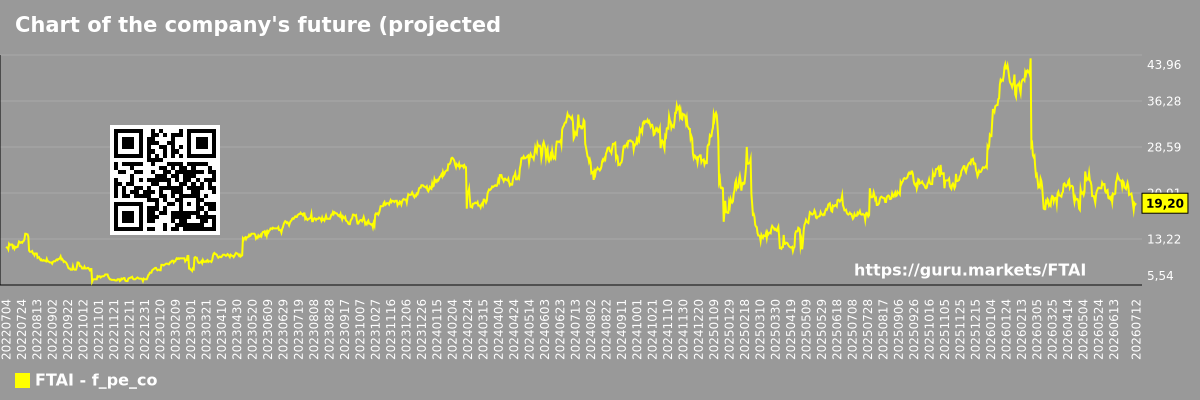
Future (projected) P/E of the company
FTAI Aviation owns and operates aviation assets such as engines and aircraft. This chart reflects analyst forecasts for the aviation industry. Its dynamics reflect the recovery in passenger traffic, demand for cargo, and airlines' need to lease and maintain expensive assets, which underpin FTAI's future revenue.
%20P%2FE&width=1200&height=400&colorIndex=35&v=mvj9owew.wip-79mfnr4&start=20220704&end=20261022&filename=GURU_Markets_-_Chart-of-the-companys-future-projected-PE "Chart of the company's future (projected) P/E")
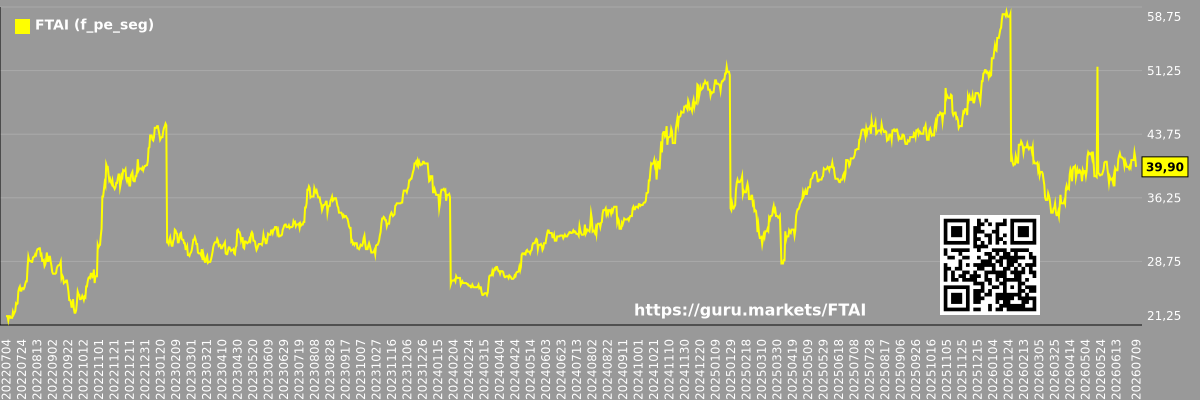
Future (projected) P/E of the market segment - Aviaprom
FTAI Aviation owns and leases aviation assets such as aircraft and engines, providing flexibility to airlines. The chart shows the company's estimated future revenue relative to the broader aviation industry. This provides insight into how investors view its leasing business model as more or less profitable than other market participants.
%20P%2FE%20graph%20of%20the%20market%20segment%20-%20Aviaprom&width=1200&height=400&colorIndex=36&v=mvj9owew.wip-79mfnr4&start=20220704&end=20261022&filename=GURU_Markets_-_Future-projected-PE-graph-of-the-market-segment-Aviaprom "Future (projected) P/E graph of the market segment - Aviaprom")
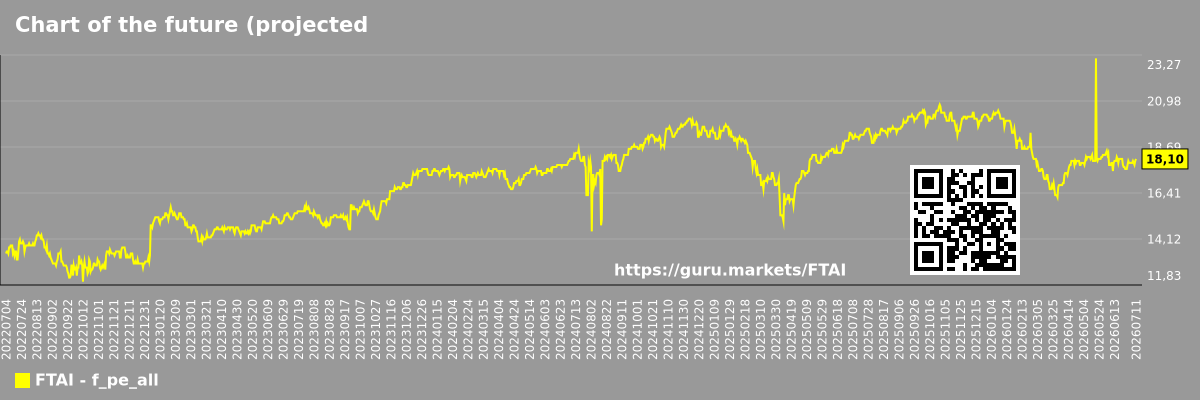
Future (projected) P/E of the market as a whole
FTAI Aviation owns and leases aircraft engines and aircraft, occupying a unique niche in the aviation industry. This indicator provides a general assessment of future economic prospects. This is critical for FTAI: global economic growth and investor optimism mean increased air travel, increased demand for their assets, and the ability of airlines to pay their leases on time.
%20P%2FE%20of%20the%20market%20as%20a%20whole&width=1200&height=400&colorIndex=37&v=mvj9owew.wip-79mfnr4&start=20220704&end=20261022&filename=GURU_Markets_-_Chart-of-the-future-projected-PE-of-the-market-as-a-whole "Chart of the future (projected) P/E of the market as a whole")
Profit of the company, segment and market as a whole
Company profit
FTAI Aviation owns and leases aircraft engines and airplanes—critical and valuable assets for airlines. The performance of this business is directly dependent on the state of global air travel and the value of its assets. This chart shows the net financial results of this company, which operates at the intersection of finance and the aviation industry.

Profit of companies in the market segment - Aviaprom
FTAI Aviation owns and manages aviation assets such as aircraft and engines. This chart shows the overall financial health of the aviation industry. For FTAI, it's a barometer of the health of their customers—the airlines. Growing airline profitability indicates their ability to pay leases and maintain their aircraft.

Overall market profit
FTAI Aviation owns and leases aircraft engines and aircraft, and manages infrastructure assets. This business is closely tied to the global aviation and cargo industries. The recovery and growth of air traffic after downturns directly impacts the company's revenue. This chart allows you to assess the overall business activity that keeps planes in the air.

Future (predicted) profit of the company, segment and market as a whole
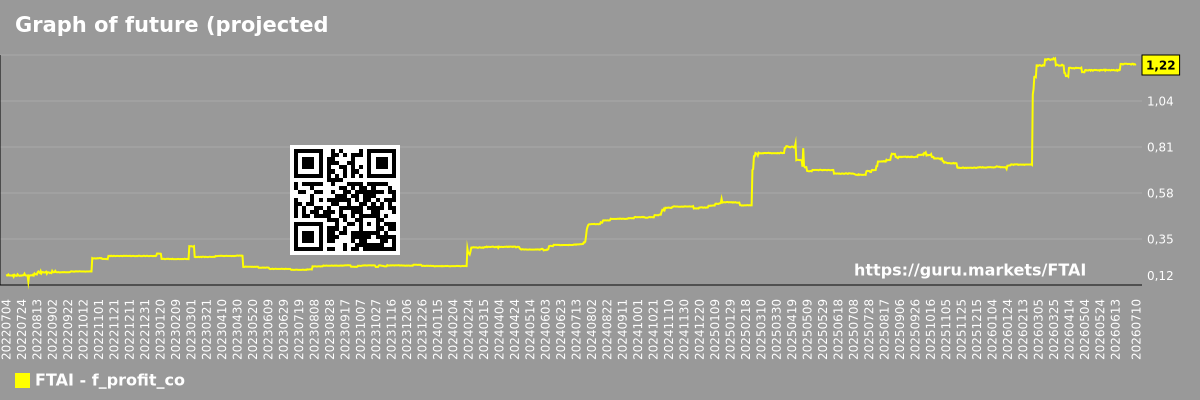
Future (projected) profit of the company
FTAI Aviation specializes in the ownership and leasing of aviation assets, primarily engines and aircraft. This profit forecast is closely tied to the health of the global aviation industry. Analysts estimate growth in passenger traffic, demand for air travel, and, consequently, airlines' need for the assets FTAI provides.
%20profit%20of%20the%20company&width=1200&height=400&colorIndex=41&v=mvj9owew.wip-79mfnr4&start=20220704&end=20261022&filename=GURU_Markets_-_Graph-of-future-projected-profit-of-the-company "Graph of future (projected) profit of the company")
Future (predicted) profit of companies in the market segment - Aviaprom
FTAI Aviation owns and operates aviation assets, such as engines and aircraft, through leasing. The future profitability of this segment depends on the health of air travel and demand for fleet renewal. This chart shows the aggregated expectations of analysts across the aviation industry, reflecting their views on the recovery and growth of global passenger traffic.
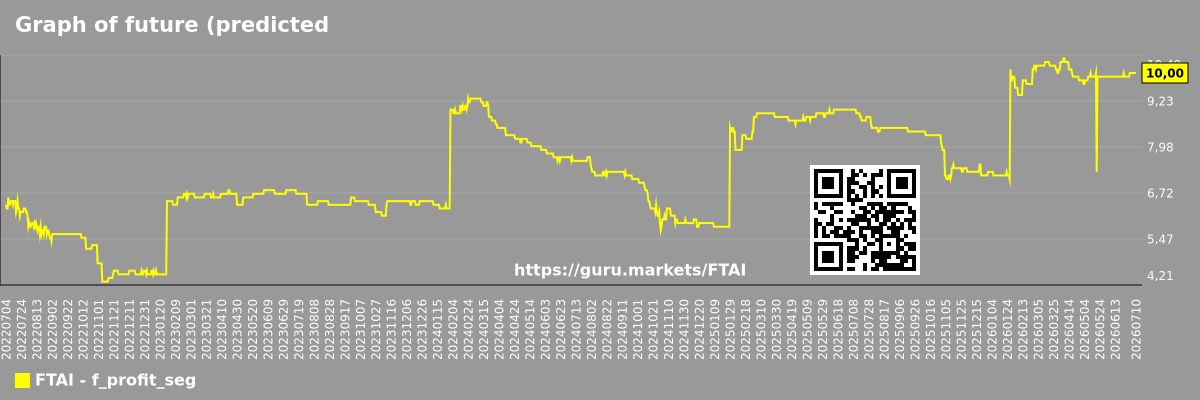%20profits%20of%20companies%20in%20a%20market%20segment%20-%20Aviaprom&width=1200&height=400&colorIndex=42&v=mvj9owew.wip-79mfnr4&start=20220704&end=20261022&filename=GURU_Markets_-_Graph-of-future-predicted-profits-of-companies-in-a-market-segment-Aviaprom "Graph of future (predicted) profits of companies in a market segment - Aviaprom")
Future (predicted) profit of the market as a whole
FTAI Aviation owns and operates aviation assets such as engines and aircraft. Its business is directly dependent on the health of the aviation industry. The market revenue forecasts presented in this chart are an indicator of global economic activity, which determines passenger and cargo air travel volumes.
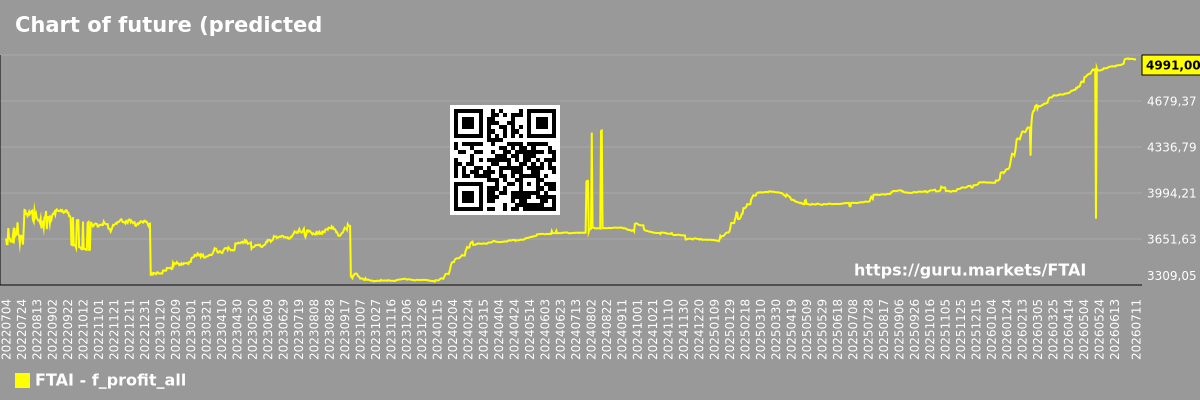%20profits%20of%20the%20market%20as%20a%20whole&width=1200&height=400&colorIndex=43&v=mvj9owew.wip-79mfnr4&start=20220704&end=20261022&filename=GURU_Markets_-_Chart-of-future-predicted-profits-of-the-market-as-a-whole "Chart of future (predicted) profits of the market as a whole")
P/S of the company, segment and market as a whole
P/S
FTAI Aviation owns and operates aviation assets such as aircraft and engines, leasing them out. This chart reflects the market's assessment of its revenue, which is directly dependent on the health of the global aviation industry. An increase in this indicator indicates optimism regarding passenger traffic and demand for air travel, which increases the value of its assets.

P/S market segment - Aviaprom
FTAI Aviation owns and operates a portfolio of aviation assets, including engines and aircraft, which it leases to airlines worldwide. This chart shows the average revenue multiple for the aviation industry. It allows investors to understand how FTAI's unique business model and its ability to generate cash flow from its assets are valued.

P/S of the market as a whole
FTAI Aviation owns and manages aviation assets such as engines and aircraft, leasing them to airlines worldwide. Its business is directly dependent on the state of air travel. The market-wide revenue estimate shown in this chart allows for a comparison of the highly specialized and capital-intensive aviation leasing sector with overall economic trends.

Future P/S of the company, segment and market as a whole
Future (projected) P/S of the company
FTAI Aviation owns and leases aircraft engines and aircraft, forming a vital link in the global aviation ecosystem. This chart shows the company's valuation based on its projected future revenues. This allows us to assess market expectations for the recovery and growth of air travel and demand for aviation assets.
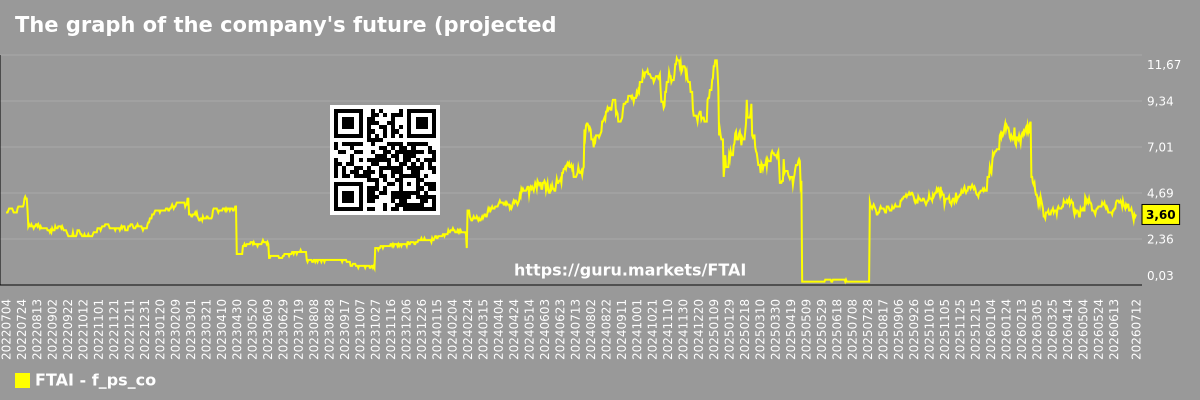%20P%2FS&width=1200&height=400&colorIndex=47&v=mvj9owew.wip-79mfnr4&start=20220704&end=20261022&filename=GURU_Markets_-_The-graph-of-the-companys-future-projected-PS "The graph of the company's future (projected) P/S")
Future (projected) P/S of the market segment - Aviaprom
FTAI Aviation owns and leases aircraft assets, primarily engines. Its business is directly dependent on the state of global air travel and fleet maintenance demand. This metric demonstrates how investors view the prospects of its capital-intensive but highly sought-after business model compared to other companies in the aviation industry.
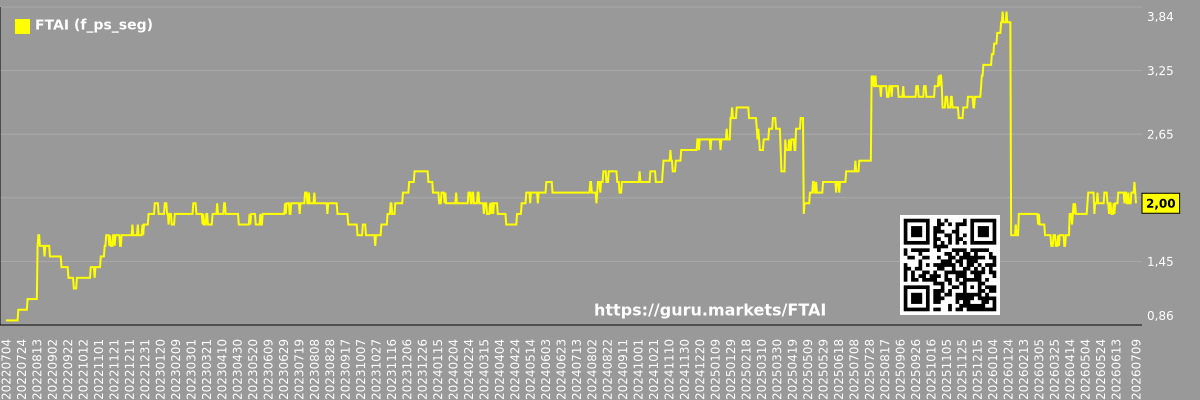%20P%2FS%20market%20segment%20graph%20-%20Aviaprom&width=1200&height=400&colorIndex=48&v=mvj9owew.wip-79mfnr4&start=20220704&end=20261022&filename=GURU_Markets_-_Future-projected-PS-market-segment-graph-Aviaprom "Future (projected) P/S market segment graph - Aviaprom")
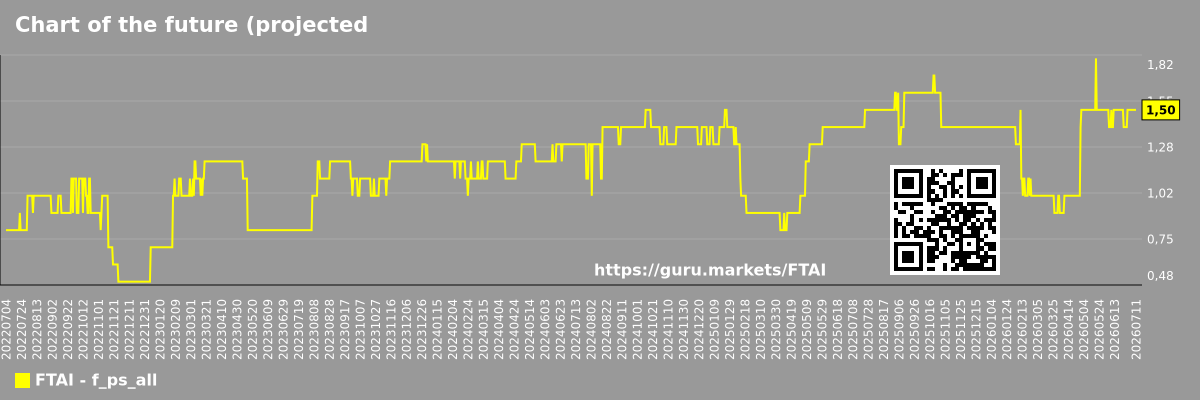
Future (projected) P/S of the market as a whole
FTAI Aviation owns and leases aircraft engines and airplanes—long-life assets. Their business thrives when air travel grows. This chart shows the market's confidence in global economic growth and consumer spending. For FTAI, this is directly related to demand for air travel and, consequently, their aviation assets.
%20P%2FS%20of%20the%20market%20as%20a%20whole&width=1200&height=400&colorIndex=49&v=mvj9owew.wip-79mfnr4&start=20220704&end=20261022&filename=GURU_Markets_-_Chart-of-the-future-projected-PS-of-the-market-as-a-whole "Chart of the future (projected) P/S of the market as a whole")
Sales of the company, segment and market as a whole
Company sales
FTAI Aviation owns and leases aviation assets, primarily engines and aircraft. The company's business consists of providing airlines with essential equipment without incurring significant capital expenditures. This chart illustrates the state of the aviation industry: rising passenger traffic and expanding carrier route networks directly drive demand for FTAI leasing.

Sales of companies in the market segment - Aviaprom
FTAI Aviation is a unique company that owns and leases aviation assets, focusing on engines and aircraft. They are more than just lessors; they are experts in maximizing the lifecycle value of aircraft. This chart shows how their revenue is split between leasing and aerospace sales, revealing their business model.

Overall market sales
FTAI Aviation owns and operates aviation assets such as aircraft and engines, leasing them. Its business thrives as air travel volumes grow. This graph, reflecting the overall health of the economy, is an indicator of business and tourism activity, which directly drives demand for FTAI's services, ensuring the utilisation of its fleet.

Future sales volume of the company, segment and market as a whole
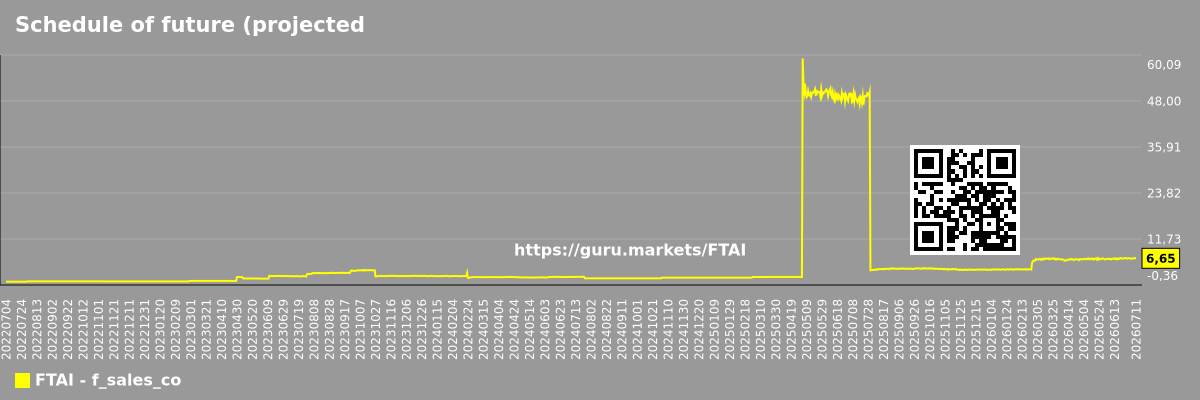
Future (projected) sales of the company
FTAI Aviation owns and manages a portfolio of aircraft assets, including engines and aircraft, which it leases. Future sales forecasts, shown in this chart, are closely linked to the state of the global aviation industry. The increased expectations are driven by increased passenger traffic, which drives demand for engine leasing and maintenance services.
%20sales%20of%20the%20company&width=1200&height=400&colorIndex=53&v=mvj9owew.wip-79mfnr4&start=20220704&end=20261022&filename=GURU_Markets_-_Schedule-of-future-projected-sales-of-the-company "Schedule of future (projected) sales of the company")
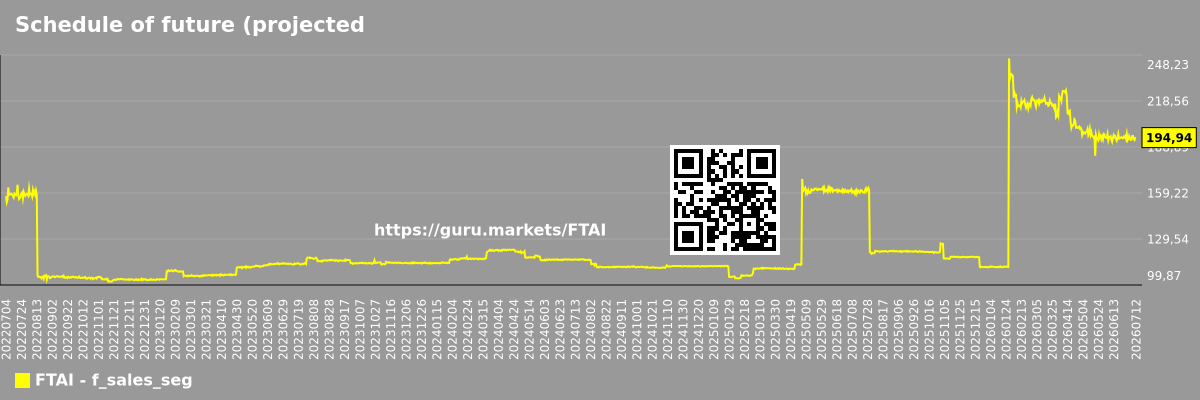
Future (projected) sales of companies in the market segment - Aviaprom
FTAI Aviation owns and leases critical aviation assets, primarily aircraft engines and aircraft. This chart reflects revenue expectations for the entire global aviation industry. It allows us to assess the forecast for growth in air travel and, consequently, demand for leasing services, which are the core of the company's business.
%20sales%20of%20companies%20in%20the%20market%20segment%20-%20Aviaprom&width=1200&height=400&colorIndex=54&v=mvj9owew.wip-79mfnr4&start=20220704&end=20261022&filename=GURU_Markets_-_Schedule-of-future-projected-sales-of-companies-in-the-market-segment-Aviaprom "Schedule of future (projected) sales of companies in the market segment - Aviaprom")
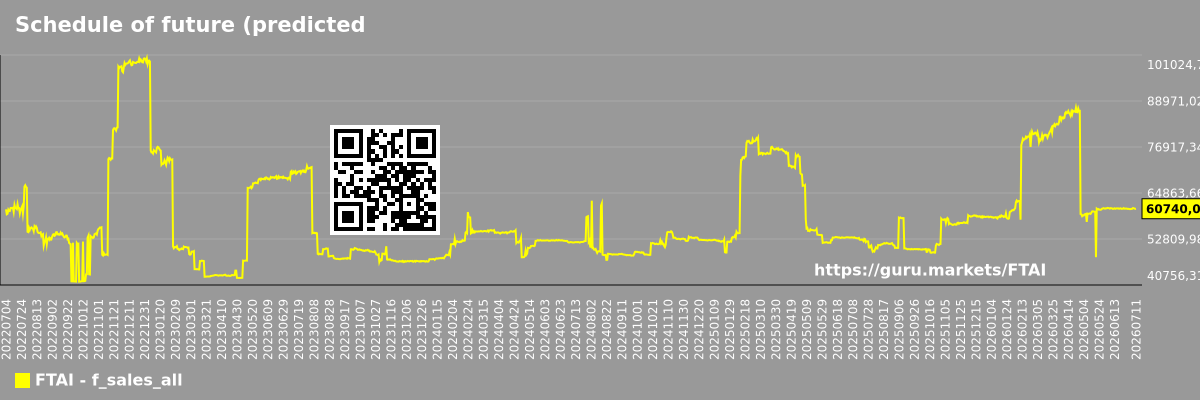
Future (projected) sales of the market as a whole
FTAI Aviation owns and operates aviation assets such as engines and aircraft. The forecasts in this chart reflect expectations for global trade and passenger traffic growth. For FTAI, this directly signals future demand for its assets from airlines seeking to expand or upgrade their fleets to meet growing market demands.
%20sales%20of%20the%20market%20as%20a%20whole&width=1200&height=400&colorIndex=55&v=mvj9owew.wip-79mfnr4&start=20220704&end=20261022&filename=GURU_Markets_-_Schedule-of-future-predicted-sales-of-the-market-as-a-whole "Schedule of future (predicted) sales of the market as a whole")
Marginality of the company, segment and market as a whole
Company marginality
FTAI Aviation's profitability, illustrated in this chart, is based on its unique business model in the aviation industry. The company owns and leases aircraft engines and aircraft. Its profitability depends on high demand for leasing services and the ability to effectively manage and maintain its assets, which ensures stable cash flow.

Market segment marginality - Aviaprom
FTAI Aviation owns and manages aviation assets, including engines and aircraft, leasing them globally. Business profitability depends on effective lifecycle management of this expensive equipment. The presented data demonstrates the profitability of this model. A comparison with the industry reveals how successfully the company maximizes the return on its assets.

Market marginality as a whole
FTAI Aviation owns and leases aircraft engines and aircraft. The company's business is directly dependent on the health of the aviation industry. This graph, reflecting overall economic activity, is a leading indicator of passenger and cargo traffic, which determine airline demand for FTAI's assets and services.

Employees in the company, segment and market as a whole
Number of employees in the company
FTAI Aviation owns and manages a portfolio of critical aviation assets, primarily aircraft engines and aircraft. This chart reflects the size of its team of highly qualified experts in finance, leasing, and maintenance. Their work enables airlines to optimize their fleets and maintain flight continuity worldwide.

Share of the company's employees within the market segment - Aviaprom
FTAI Aviation owns and manages critical aviation assets such as engines and aircraft. This metric reflects the company's operational weight in the leasing and maintenance niche. It demonstrates the proportion of highly qualified aviation technicians and engineers in this segment that ensure the smooth operation of the company's client fleets worldwide.

Number of employees in the market segment - Aviaprom
FTAI Aviation owns and manages aviation assets such as aircraft and engines, leasing them globally. Employment dynamics in this segment are closely linked to the health of the aviation industry. This chart shows how many specialists are needed for maintenance, logistics, and financing of the global fleet, serving as an indicator of demand for air travel.

Number of employees in the market as a whole
FTAI Aviation owns and manages aviation assets such as aircraft and engines, leasing them globally. This total employment chart is a barometer of global economic activity. Job growth signals a pickup in business travel and tourism, which drives airlines to expand their fleets and increase demand for the assets FTAI manages.

Market capitalization per employee (in thousands of dollars) of the company, segment, and market as a whole
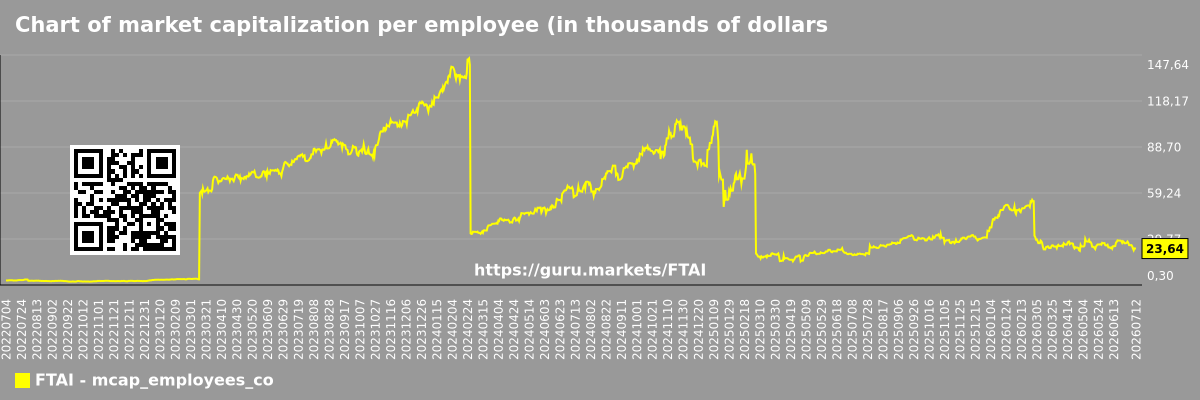
Market capitalization per employee (in thousands of dollars) of the company (FTAI)
FTAI Aviation owns and leases aircraft engines and airplanes. This chart clearly demonstrates a business model built on the ownership of high-value assets. The very high capitalization per employee is explained by the fact that managing a multi-billion-dollar aircraft portfolio requires a relatively small team of financial and technical experts.
%20of%20the%20company%20(FTAI)&width=1200&height=400&colorIndex=63&v=mvj9owew.wip-79mfnr4&start=20220704&end=20261022&filename=GURU_Markets_-_Chart-of-market-capitalization-per-employee-in-thousands-of-dollars-of-the-company-FTAI "Chart of market capitalization per employee (in thousands of dollars) of the company (FTAI)")
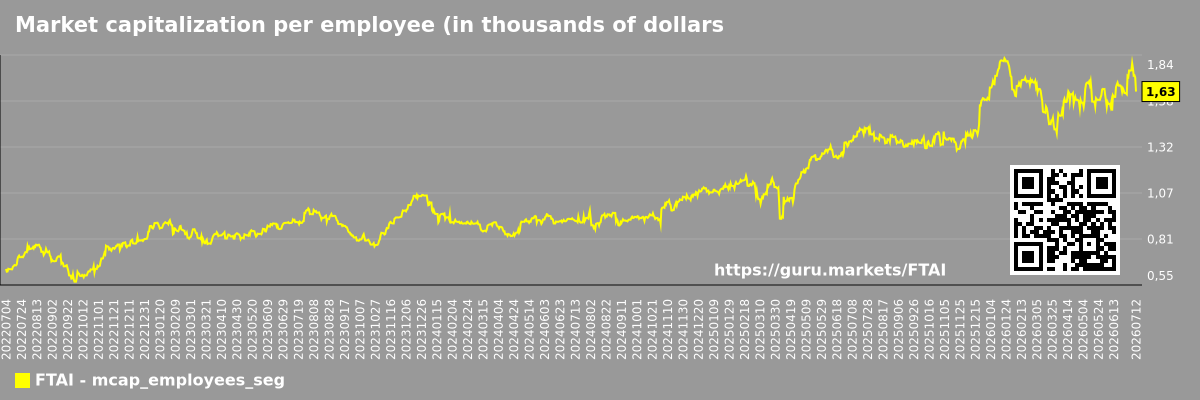
Market capitalization per employee (in thousands of dollars) in the market segment - Aviaprom
FTAI Aviation owns and leases aviation assets, primarily jet engines and aircraft. Its business model is similar to a REIT: the value is captured in high-value assets rather than a large workforce. This chart shows the industry average. It clearly illustrates how "light" in personnel and "heavy" in assets FTAI is compared to other aviation industry players.
%20by%20market%20segment%20-%20Aviaprom&width=1200&height=400&colorIndex=64&v=mvj9owew.wip-79mfnr4&start=20220704&end=20261022&filename=GURU_Markets_-_Market-capitalization-per-employee-in-thousands-of-dollars-by-market-segment-Aviaprom "Market capitalization per employee (in thousands of dollars) by market segment - Aviaprom")
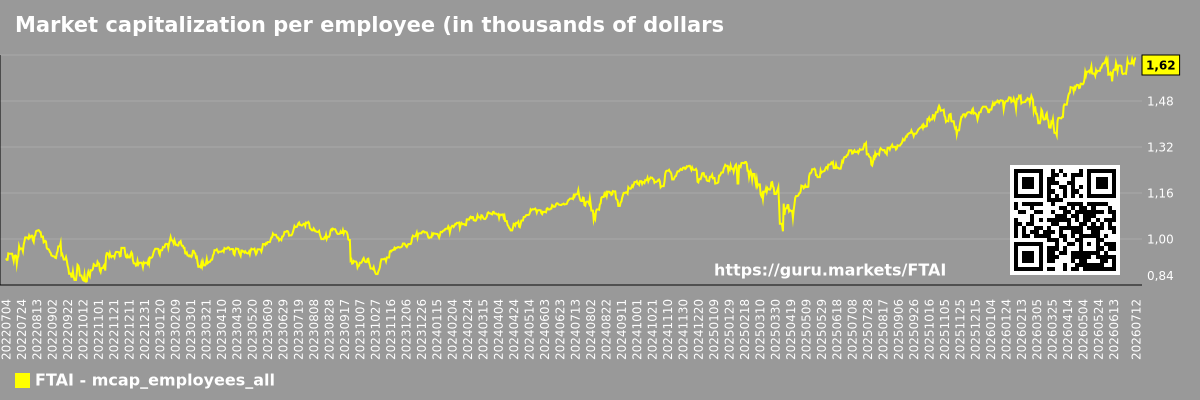
Market capitalization per employee (in thousands of dollars) for the overall market
FTAI Aviation owns and leases aviation assets such as engines and aircraft. Market capitalization per employee is an indicator of the effectiveness of managing a portfolio of high-value assets. The chart demonstrates the ability of a small team to generate massive cash flows while managing billions of dollars of assets worldwide.
%20for%20the%20overall%20market&width=1200&height=400&colorIndex=65&v=mvj9owew.wip-79mfnr4&start=20220704&end=20261022&filename=GURU_Markets_-_Market-capitalization-per-employee-in-thousands-of-dollars-for-the-overall-market "Market capitalization per employee (in thousands of dollars) for the overall market")
Profit per employee (in thousands of dollars) for the company, segment, and market as a whole
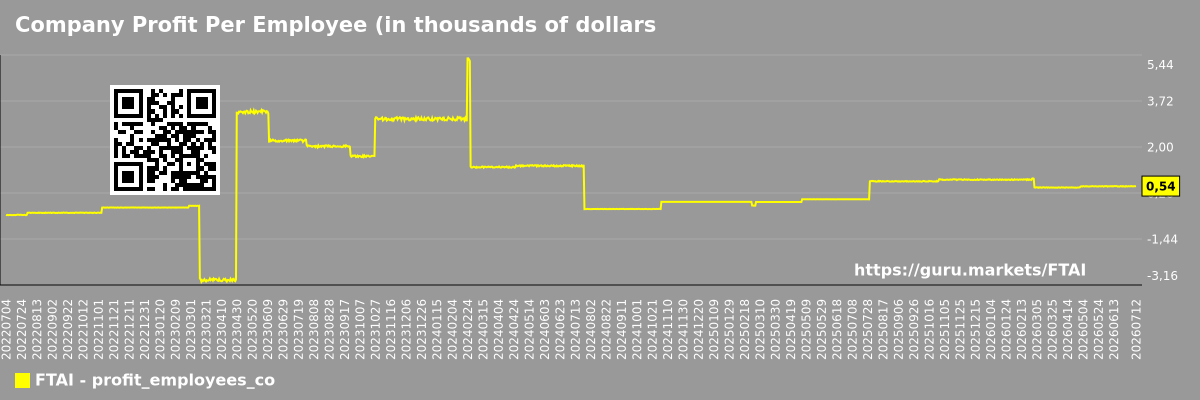
Profit per employee (in thousands of dollars) of the company (FTAI)
FTAI Aviation specializes in the leasing and maintenance of aircraft engines and aircraft. The company's business model is based on the ownership of high-value assets. This chart demonstrates how a small team of finance, logistics, and maintenance specialists manages a multi-billion-dollar portfolio. Efficiency here is not about the number of people, but about the profitability of each asset they manage.
%20Chart%20(FTAI)&width=1200&height=400&colorIndex=66&v=mvj9owew.wip-79mfnr4&start=20220704&end=20261022&filename=GURU_Markets_-_Company-Profit-Per-Employee-in-thousands-of-dollars-Chart-FTAI "Company Profit Per Employee (in thousands of dollars) Chart (FTAI)")
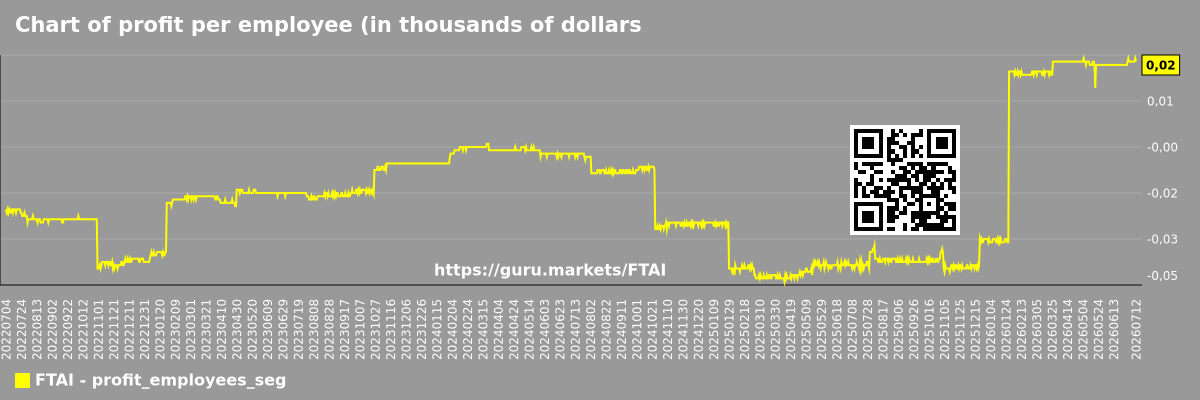
Profit per employee (in thousands of dollars) in the market segment - Aviaprom
FTAI Aviation owns and leases mature aviation assets, primarily aircraft engines. This chart shows the benchmark for Aviaprom (in the leasing niche). In this sector, the average profit per employee is very high. It's an "asset-heavy, people-light" business: a small staff of financiers manages a portfolio of expensive, income-generating assets.
%20in%20the%20market%20segment%20-%20Aviaprom&width=1200&height=400&colorIndex=67&v=mvj9owew.wip-79mfnr4&start=20220704&end=20261022&filename=GURU_Markets_-_Chart-of-profit-per-employee-in-thousands-of-dollars-in-the-market-segment-Aviaprom "Chart of profit per employee (in thousands of dollars) in the market segment - Aviaprom")
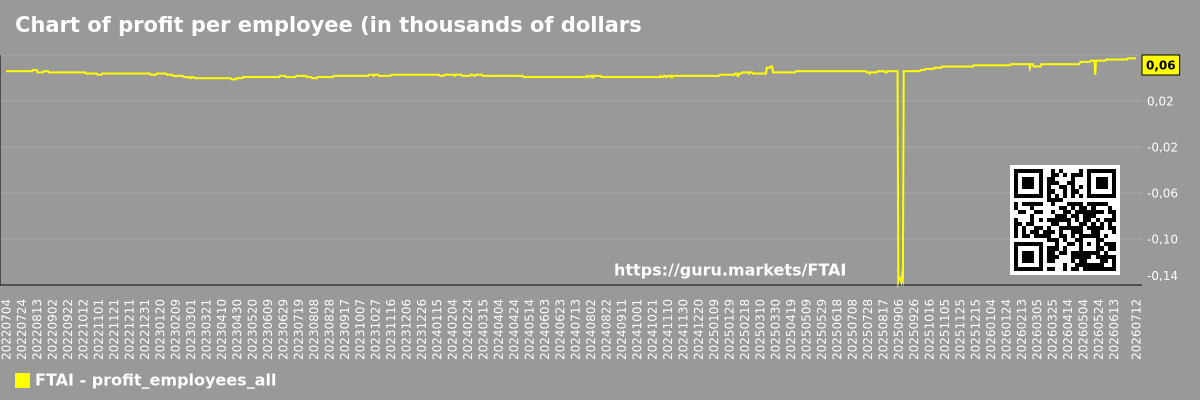
Profit per employee (in thousands of dollars) for the market as a whole
FTAI Aviation owns and manages aviation assets such as aircraft and engines, leasing them out. Economic productivity data helps evaluate this business model. Profit is generated not by production, but by the efficient management of expensive assets. A small management team oversees a portfolio that generates stable cash flow.
%20for%20the%20market%20as%20a%20whole&width=1200&height=400&colorIndex=68&v=mvj9owew.wip-79mfnr4&start=20220704&end=20261022&filename=GURU_Markets_-_Chart-of-profit-per-employee-in-thousands-of-dollars-for-the-market-as-a-whole "Chart of profit per employee (in thousands of dollars) for the market as a whole")
Sales to employees of the company, segment and market as a whole
Sales per company employee (FTAI)
FTAI Aviation owns and manages aviation assets such as engines and aircraft. This chart demonstrates the effectiveness of its unique business model, which focuses on managing high-value assets. High revenue per employee is the result not of production activities, but of sound financial and technical management of its aircraft portfolio.
&width=1200&height=400&colorIndex=69&v=mvj9owew.wip-79mfnr4&start=20220704&end=20261022&filename=GURU_Markets_-_Sales-chart-per-company-employee-FTAI "Sales chart per company employee (FTAI)")
Sales per employee in the market segment - Aviaprom
FTAI Aviation is a unique company that owns and leases aviation assets such as engines and aircraft. Their business isn't transportation, but rather the management of expensive hardware. Their efficiency is measured not by thousands of pilots, but by how well a small team manages billions of dollars in assets. This chart compares their capital-intensive model to other aviation industry players in terms of revenue generation per employee.

Sales per employee for the market as a whole
FTAI Aviation is essentially an "investment bank" for aviation. They don't fly; they own and lease mature assets: aircraft engines and airplanes. Their business is the capital and expertise in managing these assets. This chart shows the astronomical returns their small, elite team generates while managing a portfolio worth billions.

Short shares by company, segment and market as a whole
Shares shorted by company (FTAI)
FTAI Aviation (FTAI) owns and leases aviation assets—engines and aircraft. It's a capital-intensive business dependent on the health of air travel. This chart measures the volume of bearish bets. An increase in short positions may signal that investors expect a decline in demand for air travel, a drop in used engine prices, or see risks in the company's debt load.
&width=1200&height=400&colorIndex=72&v=mvj9owew.wip-79mfnr4&start=20220704&end=20261022&filename=GURU_Markets_-_Short-Shares-Chart-for-the-Company-FTAI "Short Shares Chart for the Company (FTAI)")
Shares shorted by market segment - Aviaprom
FTAI Aviation (FTAI) owns and operates critical aviation assets, such as engines and aircraft, through leasing. This indicator reflects overall pessimism in the aviation industry. It aggregates short positions, reflecting how many investors are betting on a downturn in the airline and leasing sector, possibly anticipating a decline in traffic or rising fuel prices.

Shares shorted by the overall market
FTAI Aviation (FTAI) operates a unique business: they own and lease aircraft engines and manage transportation infrastructure. This chart shows the overall level of fear. When pessimism increases, investors fear a slowdown in air travel. This directly impacts FTAI, as it reduces demand for their spare engines and terminal services.

RSI 14 indicator for a company, segment, and market as a whole
The company's RSI 14 indicator (FTAI)
FTAI Aviation owns and leases aircraft engines and aircraft. Its business is highly dependent on the health of the aviation industry. This chart above 70 may reflect a recovery in air travel. Oversold territory (<30) is often associated with fears of a recession, which would reduce demand for flights and leasing.
&width=1200&height=400&colorIndex=75&v=mvj9owew.wip-79mfnr4&start=20220704&end=20261022&filename=GURU_Markets_-_RSI-14-indicator-chart-for-the-companys-stock-FTAI "RSI 14 indicator chart for the company's stock (FTAI)")
RSI 14 Market Segment - Aviaprom
FTAI Aviation (FTAI) is a unique player in the aviation industry. They own and lease aircraft engines and aircraft, essentially acting as a "bank" of critical aviation assets. This chart shows the overall sentiment in the Aviation Industry segment. It helps us understand whether FTAI's performance reflects their successful business model or whether the entire aviation industry is overheated by expectations of a travel recovery.

RSI 14 for the overall market
FTAI Aviation (FTAI) specializes in the leasing and maintenance of aircraft engines and aircraft. It is a niche player in the aviation ecosystem. This indicator reflects overall market sentiment. Aviation is extremely sensitive to panic (as during the pandemic) and euphoria (anticipation of a travel boom). FTAI is at the epicenter of these sentiments.

Analyst consensus forecast for the company's share price, the segment, and the market as a whole
Analyst consensus stock price forecast FTAI ()
FTAI Aviation (FTAI) specializes in the ownership and leasing of aircraft engines—the most expensive component of an aircraft. It is a unique "infrastructure" business in aviation. This chart shows the analyst consensus forecast. Their target prices are based on global air traffic growth forecasts, which drives demand for their engines and services.
&width=1200&height=400&colorIndex=78&v=mvj9owew.wip-79mfnr4&start=20220704&end=20261022&filename=GURU_Markets_-_A-chart-showing-analyst-consensus-forecasts-for-the-expected-stock-price.-FTAI "A chart showing analyst consensus forecasts for the expected stock price. FTAI ()")
The difference between the consensus estimate and the actual stock price FTAI ()
FTAI Aviation owns and leases sought-after aviation assets, primarily aircraft engines (especially the CFM56, which powers the Boeing 737 and Airbus A320). This chart shows the gap between the market's current valuation of FTAI and analysts' perceptions of its value. This reflects their view of the value of their engine portfolio amid a shortage of new aircraft.
&width=1200&height=400&colorIndex=79&v=mvj9owew.wip-79mfnr4&start=20220704&end=20261022&filename=GURU_Markets_-_A-chart-showing-the-difference-between-the-consensus-forecast-and-the-actual-stock-price.-FTAI "A chart showing the difference between the consensus forecast and the actual stock price. FTAI ()")
Analyst consensus forecast for stock prices by market segment - Aviaprom
FTAI Aviation owns the "hearts" of aircraft—their engines. The company leases engines and aircraft, profiting from demand for air travel and maintenance. This chart shows analysts' overall expectations for the entire aviation industry and leasing sector. It reflects whether experts believe air traffic will grow or decline.

Analysts' consensus forecast for the overall market share price
FTAI Aviation owns and leases aircraft engines and airplanes. Their business reflects the health of air travel. This chart, which summarizes expert opinions, is important because it predicts consumer and business activity. If market expectations are positive, people and companies fly more, increasing demand for FTAI's assets.

AKIMA index of the company, segment and market as a whole
AKiMA Company Index
FTAI Aviation is a niche but high-margin aviation business. They own and lease aircraft engines and aircraft, focusing on the used market. This chart reflects the health of the global aviation industry. It measures the demand for their assets (especially the popular CFM56 engines) and their ability to generate cash flow from lease payments.

AKIMA Market Segment Index - Aviaprom
FTAI Aviation is a unique player in the aviation industry; the company doesn't own aircraft (like AerCap), but rather owns and leases aircraft engines—an aircraft's most valuable asset. This aggregate metric evaluates companies. The chart shows the sector average. This benchmark: how does FTAI's niche (engines only) and fintech model differentiate it from the average competitor?

The AKIM Index for the overall market
FTAI Aviation is a unique company that owns and leases aviation assets, primarily engines. Its business is the picks and shovels of air travel. This chart, reflecting the market average, provides a macro backdrop. It helps assess how FTAI, which is dependent on flight hours (air travel growth), compares to the overall macroeconomic situation.
